Posts

Coming up at the International Conference on Creationism

Image
  The International Conference on Creationism is just around the corner, July 16-19 at Cedarville University. I've got five papers coming out at the ICC, and I thought I'd share a preview here. First up, "Testing the order of the fossil record: Preliminary observations on stratigraphic-clade congruence and its implications for models of evolution and creation," a collaborative effort to study the large-scale patterns of the fossil record.  This was actually a massive project that ballooned into something much bigger than I anticipated.  We used published phylogenies to measure how well these evolutionary hypotheses actually fit the order of appearance in the fossil record.  The results were complicated but extremely interesting.  We found lots of patterns that we didn't expect and really didn't have a good explanation for.  It should make for an interesting talk. Next, "A preliminary evaluation of ape baramins."   This one is long overdue.  Defi...
Graves, engravings, and tools? Oh my!

Image
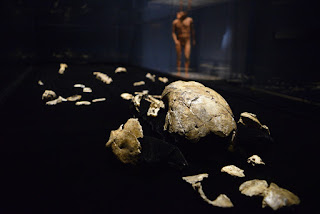
  Before we get started, I thought it would be good to recap the last decade of work.  If you'd like to skip straight to the current stuff, scroll down to the paragraph that begins "Yesterday, we got two more big announcements...."  First, I'll set the stage. In 2013, explorers working on the suggestion of Lee Berger discovered a cache of hominin bones in an extremely remote chamber of the Rising Star Cave system in South Africa.  In 2015, the new hominin was introduced to the world by a set of papers, scans, and a documentary film.  The researchers suggested that this newly-described hominin was deliberately placing bodies of its contemporaries in the chamber, which at the time they termed "body disposal."  This suggestion sparked some skeptical remarks from folks like Chris Stringer, who thought that something with a brain that small could not engage in such a complex behavior. I got involved almost immediately by trying to discern whether Homo naledi sh...

We're doing fine, thanks!

Image
  It's been a while since I've posted anything here, and even longer since I've posted anything about Core Academy of Science , so it's time for an update! First of all, even though I've said this in other venues, thank you, thank you, thank you for a great Holiday Fund Drive!  We blew away previous totals from past years with a whopping $35,755!  I cannot fully express my gratitude and shock and delight.  THANK YOU! Over on Let's Talk Creation , we have a new website , thanks to the hard work of my wife.  Paul and I have also released a lot of really interesting episodes this year, including my first ever public comments on Behemoth and Leviathan , an introduction to natural evil , and a presently-running series on the Flood/Post-Flood boundary .  If you haven't been listening, we've got 56 episodes out now, so there's plenty of material to binge.  If you have been listening, thank you!  We really appreciate all the great comments we've been get...

Did apes make stone tools?

Image
  You've probably seen the headlines declaring that Paranthropus made and used stone tools, and if not, your news aggregator probably isn't tuned into "human evolution" stories like mine.  The stories are referring to a newly published study of a very interesting site on the shore of Lake Victoria on the western edge of Kenya .  Paranthropus is the new genus name for what used to be called the "robust australopithecines."  These creatures are characterized by their huge jaws, wide faces, and on some specimens, a sagittal crest like a gorilla.  Studies of their teeth suggest that a large fraction of their diet was grass.  My own research has consistently shown that Paranthropus may be a separate created kind from both humans and other apes like Australopithecus afarensis , "Lucy."  So my take is that they're not human. For one of my recent research projects, I spent some time looking at stone tools in east Africa, and I came away from that w...

Neandertals: Mighty Hunters before the Lord!

Image
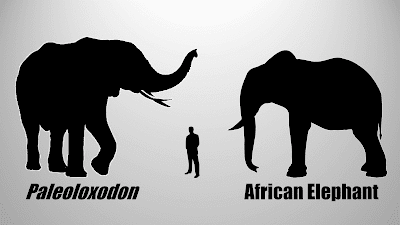
  New research last week documents a startling record of Neandertal hunting.  Now we've known for some time that Neandertals were good hunters and that they could take down big game.  This new work based on an ancient lake deposit from Germany where the remains of a couple dozen straight-tusked elephants ( Paleoloxodon ) were found.  They were originally excavated in the 1980s and 1990s during rescue excavations ahead of mining operations.  There were plenty of stone tools found with them, and they've long been known to be an odd deposit.  The remains were largely from adult bull elephants, which in African elephants are known to be kind of loners.  There was a dearth of young or female animals.  The way they were deposited was also peculiar, with a few sites concentrating just tusks.  Not surprisingly, the concentration of stone tools matched that of the elephant bones. The new research by Gaudzinski-Windheuser and colleagues examined the b...

Homo naledi with controlled FIRE!

Image
At his Carnegie Science lecture tonight, Lee Berger just announced abundant evidence of fire use in the Rising Star Cave, where the famous Homo naledi remains were found.  That's beyond HUGE. To recap: A massive fossil trove from a cave called Rising Star has been excavated by Lee Berger's team over the last decade.  The creatures are called Homo naledi , and the peculiar attributes of their deposition suggests they were intentionally placed their by the fellow Homo naledi . I've written about this a lot ( just search for naledi ), and I've taken flak from fellow creationists who have criticized my position on Homo naledi .  My own research has shown that Homo naledi is human, and the evidence for intentional body disposal (human burial?) is pretty overwhelming.  No one has yet proposed anything close to a model that explains the peculiar features of the Rising Star Cave and that is NOT intentional body disposal. As I mentioned, tonight Berger announced evidence of...

Neandertal cooking - or thin gruel?

Image
Seeds of the Indian Pea, Lathyrus sativa . Photo by Andrew Butko, Wikimedia , CC BY-SA 3.0 .   There's a new report this week on Neandertal cooking.  Now, we've known for a long time that Neandertals hunted and used fires, but this is the first that I know of that supports the idea that they selected, processed, and mixed vegetative ingredients to make maybe a bread or cake or something like that.  I'm kind of disappointed it isn't more evidence, because I'm not really sure how excited we should be. The report comes from a team of researchers based at English institutions, primarily the University of Liverpool.  They were working with charred bits of stuff found at previous cave excavations.  Their work was mostly electron microscopy to identify the components of the charred bits.  There was only one bit from a Neandertal site, namely Shanidar in northern Iraq.  This piece contained ground up remnants of pulses , legumes of the genera Lathyrus (India...